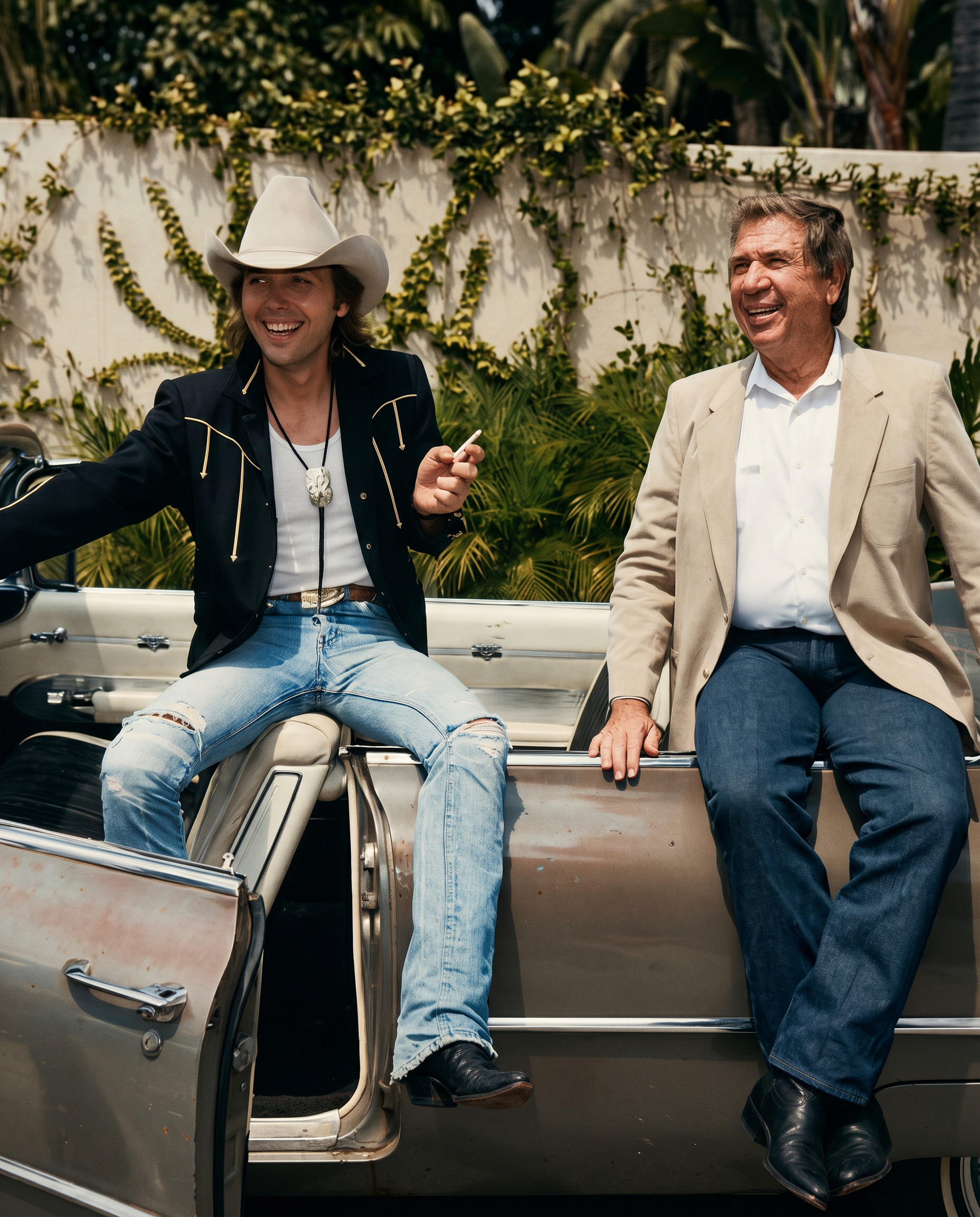
free hit counter HE’D BEEN NUMBER ONE 20 TIMES — THEN VANISHED FOR 16 YEARS. Buck Owens had walked away from it all. He left the stage in 1980, traded the lights for quiet, and most folks figured that part of his life was over. Then a young singer named Dwight Yoakam showed up at his Bakersfield office. Unannounced. He’d grown up worshipping Buck, wore his records thin, and he came with one odd request. He wanted Buck to sing again. Not something new — an old song. “Streets of Bakersfield,” a tune Owens had cut back in 1972 that went almost nowhere. Buck said yes. What happened next, nobody saw coming. The two of them, a generation apart, carried that forgotten song all the way to Number One on October 15, 1988 — Buck’s first chart-topper in sixteen long years. But it wasn’t the charts that stayed with people. It was the way the older man looked at the younger one that night, like something quietly coming full circle. - FRESH

HE’D BEEN NUMBER ONE 20 TIMES — THEN VANISHED FOR 16 YEARS. Buck Owens had walked away from it all. He left the stage in 1980, traded the lights for quiet, and most folks figured that part of his life was over. Then a young singer named Dwight Yoakam showed up at his Bakersfield office. Unannounced. He’d grown up worshipping Buck, wore his records thin, and he came with one odd request. He wanted Buck to sing again. Not something new — an old song. “Streets of Bakersfield,” a tune Owens had cut back in 1972 that went almost nowhere. Buck said yes. What happened next, nobody saw coming. The two of them, a generation apart, carried that forgotten song all the way to Number One on October 15, 1988 — Buck’s first chart-topper in sixteen long years. But it wasn’t the charts that stayed with people. It was the way the older man looked at the younger one that night, like something quietly coming full circle.

Buck Owens, Dwight Yoakam, and the Song That Brought It All Back

By the time Buck Owens walked away from the stage in 1980, he had already become a legend. He had been number one 20 times, helped define the Bakersfield sound, and built a career that made him one of country music’s most recognizable voices. Then, almost without warning, he stepped back from it all. The lights faded, the crowds moved on, and for many fans it seemed like a long, important chapter had quietly ended.

Sixteen years passed. Country music changed. New stars came and went. And Buck Owens, at least publicly, seemed content to live a quieter life away from the constant pressure of performance.

Then a young singer named Dwight Yoakam showed up at Buck Owens’ Bakersfield office.

An Unannounced Visit That Changed Everything

Dwight Yoakam did not come with a parade or a big industry introduction. He came as a fan, and he came with conviction. He had grown up admiring Buck Owens. He knew the records, wore them thin, and understood the sharp edges and honest energy that made Buck Owens different from everyone else. For Dwight Yoakam, Buck Owens was not just a legend. Buck Owens was the standard.

And Dwight Yoakam had one strange request.

He wanted Buck Owens to sing again. Not a brand-new track built for the moment. Not a polished comeback designed by a label. He wanted an old song: “Streets of Bakersfield.”

It was a song Buck Owens had cut in 1972, and like so many songs in a long career, it had drifted past without making much noise. At the time, it had not changed the world. It had not climbed the charts. It had not become the kind of song people immediately remembered as a classic.

But Dwight Yoakam heard something else in it.

Sometimes a forgotten song is only waiting for the right voice to bring it back to life.

Buck Owens Said Yes

For many artists, being asked to revisit an older song after years away from the spotlight might have felt risky. But Buck Owens understood timing, instinct, and the power of a good record. He had spent a lifetime knowing what country music could do when it felt true.

So Buck Owens said yes.

That simple decision carried more weight than anyone could have predicted. It was not just a collaboration. It was a bridge between generations. Buck Owens, the seasoned hitmaker who had helped shape the sound of modern country, stood beside Dwight Yoakam, the young singer carrying that sound into a new era.

The result felt fresh without losing its roots. It felt familiar without being stuck in the past. More than that, it felt personal. You could hear the respect in Dwight Yoakam’s voice and the ease in Buck Owens’ delivery. Neither singer tried to outshine the other. Instead, they met in the middle, and the song became bigger than either of them alone.

The Night the Song Reached Number One

On October 15, 1988, “Streets of Bakersfield” climbed all the way to Number One. For Buck Owens, it was his first chart-topper in sixteen long years. For Dwight Yoakam, it was a career-defining moment that showed he was not just borrowing from country tradition. He was helping carry it forward.

But the real magic of that night was never only about the chart position.

What people remembered was the feeling. The older man and the younger man standing together, both connected by the same music, the same town, the same history. There was something deeply moving about seeing Buck Owens there again, not as a figure from the past, but as a living part of country music’s present.

Fans saw more than a comeback. They saw recognition. They saw gratitude. They saw a kind of circle closing gently and beautifully.

Why That Moment Still Matters

“Streets of Bakersfield” became a reminder that great songs do not always arrive when the world is ready. Sometimes they wait. Sometimes they need time. And sometimes they need the right person to walk through the door and ask for them again.

Dwight Yoakam did exactly that for Buck Owens. He did not try to rewrite history. He respected it. He listened to it. Then he helped revive it in a way that felt honest.

And Buck Owens, after years away from the spotlight, gave the world one more unforgettable chapter.

The story was bigger than a hit record. It was about admiration, trust, and the quiet power of one artist believing in another. It was about a young singer reaching out to a hero and being trusted with something precious. And it was about Buck Owens, standing beside Dwight Yoakam, looking as if he understood that music has a way of finding its way back home.

That is why “Streets of Bakersfield” endures. Not just because it went to Number One, but because it felt like fate, gratitude, and history all meeting in the same song.

In the end, Buck Owens had not simply returned. He had returned for a moment that reminded everyone why his voice mattered in the first place.


UDHËTO LIRË.
UDHËTO KOMOD.

Rezervo online shpejt, lehtë dhe pa stres.

✓ Makina të pastra
✓ Shërbim profesional
✓ Çmime të arsyeshme

Related Posts

Nga Dhurata Dora te Buta – artistët shqiptarë që do të pushtojnë Sunny Hill Festival 2026

Sunny Hill Festival edhe këtë vit do t’i kushtojë një vëmendje të veçantë skenës shqiptare, duke sjellë një listë të pasur me artistë të njohur dhe emra…

ALAN JACKSON’S FINAL CONCERT WAS NEVER JUST ABOUT SAYING GOODBYE…’” As Alan Jackson closed the curtain on his legendary touring career, fans came expecting one last unforgettable night of country music. Instead, they became part of something far bigger. Inspired by Jackson’s battle with Charcot-Marie-Tooth disease, the farewell concert helped raise an incredible $2.25 million for the CMT Research Foundation, turning an emotional goodbye into a lasting gift of hope. Now, fans are looking back on the historic final show—not only for the music, but for the legacy of generosity and courage that may impact millions for years to come.

Alan Jackson’s Final Concert Raises $2.25 Million for CMT Research Foundation A portion of ticket sales from the historic concert was donated to CMTRF, inspiring an outpouring…

THERE WASN’T A DRY EYE IN THE STADIUM…” Country music’s biggest stars are finally opening up about the unforgettable moments that made Alan Jackson’s legendary farewell concert feel even more emotional than fans realized. From heartfelt backstage memories to deeply personal tributes shared by artists who grew up inspired by him, the night became far more than just one final performance. If you thought you saw everything from the stage, these behind-the-scenes reflections reveal why so many country stars say they’ll never forget saying goodbye to one of the genre’s greatest icons.

Alan Jackson Brings His Legendary Country Music Career To An End Country music legend Alan Jackson has built an iconic career spanning more than three decades. After releasing his…

When Miranda Lambert Sang “The House That Built Me,” an Arena Remembered Where Its Heart Came From

Introduction When Miranda Lambert Sang “The House That Built Me,” an Arena Remembered Where Its Heart Came From WHEN MIRANDA LAMBERT SANG “THE HOUSE THAT BUILT ME,”…

Rory Feek’s Emotional “Papa What If” Moment With Daughter Indiana Hits Differently After Her Heart Surgery — A Father’s Love That Never Wavered

Indiana, affectionately known as Indy, recently underwent open-heart surgery to repair a congenital heart condition she has lived with since birth. The 12-year-old was diagnosed with a…

From the second the opening note echoed through the stadium, thousands of country music fans erupted into a deafening sing-along as Ella Langley took the CMA Fest stage with the hit that has defined her breakout year. Fresh off the remarkable success of her chart-topping anthem “Choosin’ Texas,” the rising country star delivered a powerful live performance filled with soaring vocals, electric energy, and unforgettable moments that had the Nashville crowd on its feet from start to finish. With stunning stage production, heartfelt emotion, and a commanding presence under the lights, it’s easy to see why fans are calling this one of the festival’s standout performances.

Langley put two of her biggest songs on display during the three-hour broadcast. Ella Langley showcased her star power during the CMA Fest presented by SoFi broadcast, delivering standout performances…