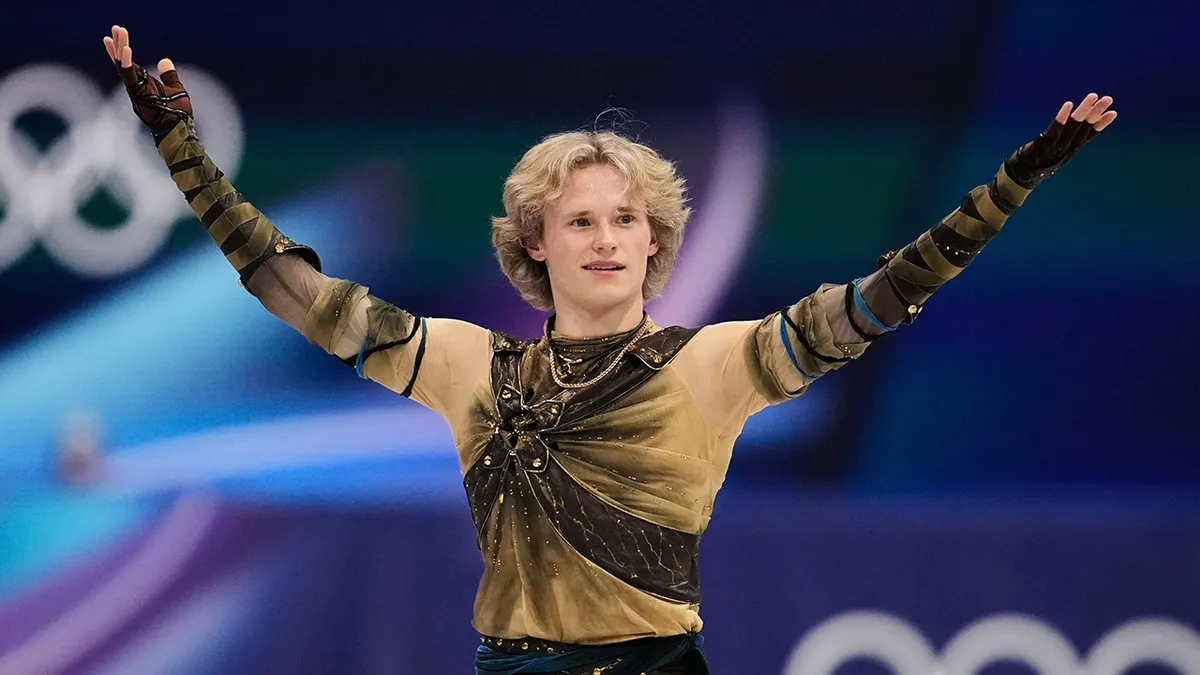
Ilia Malinin’s Redemption Skate Leaves the Arena Speechless


Just days after the sting of disappointment from his Olympic free skate, Ilia Malinin returned to the ice with a different mindset. Standing beneath the bright lights of Hallenstadion, the pressure that had followed him through the Olympics seemed to fade away. This time, there were no expectations to meet and no medals on the line. There was only the ice, the music, and a chance to remind the world why he had earned the nickname “Quad God.”

The moment the music began, the energy inside the arena shifted. Malinin attacked the program with an intensity that felt both controlled and fearless. Known for pushing the technical limits of figure skating, he wasted no time unleashing the kind of explosive elements that have defined his rise in the sport. The crowd sensed it immediately—this was not going to be a routine exhibition.

Within seconds, Malinin launched into a series of daring elements that blended athletic power with remarkable precision. His jumps cut cleanly through the air, each landing sharp and confident. The signature confidence that sometimes disappears under Olympic pressure seemed to return in full force. It was as if the skater had rediscovered the joy of skating for himself rather than for a scoreboard.

At the heart of the performance were the jumps that made him famous. Triple Axels appeared almost effortless, stitched seamlessly into complex combinations that pushed the pace of the program forward. Every landing drew a louder reaction from the audience, building a wave of excitement that rolled through the arena.

Then came the moment that truly electrified the crowd. Malinin added one of his most daring trademarks—a perfectly timed backflip. Though technically illegal in standard competitive programs, exhibition performances allow room for creativity, and Malinin embraced that freedom completely. The crowd gasped in unison before erupting into cheers that echoed through the stadium.

VIDEO:

As the routine continued, the performance became something more than just a technical display. Malinin moved across the ice with a looseness rarely seen in competition. Without the rigid structure of Olympic pressure, his skating took on a fluid, expressive quality that made the entire routine feel spontaneous and alive.

Midway through the program, one flawless sequence seemed to freeze time inside the arena. A rapid combination of spins, footwork, and jumps flowed together with such clarity that the audience collectively held its breath. In that instant, the focus shifted away from scores or rankings. What mattered was the sheer spectacle unfolding on the ice.

For many watching, it was impossible not to think back to the Olympic performance that had frustrated him just days earlier. Malinin himself acknowledged that feeling afterward, reflecting on how different things might have been. If he had skated with this same freedom during the Olympic final, he admitted, the outcome might have looked very different.

Yet the performance at Hallenstadion wasn’t about rewriting Olympic history. It became something even more powerful—a reminder of the extraordinary talent Malinin brings to the sport. When freed from the burden of expectation, he transformed the rink into a stage where technical mastery and showmanship collided.

Just when it seemed the performance had reached its peak, Malinin added a final surprise. In the closing seconds, he slipped in an element that had never appeared on the official program sheet. The spontaneous addition stunned fans and judges alike, turning the end of the routine into one more unforgettable highlight.

As the music ended and Malinin struck his final pose, the arena exploded into applause. Thousands of fans rose to their feet, cheering not just for the jumps or the spectacle, but for the spirit behind the performance. It was the kind of moment that reminds people why figure skating can be so captivating.

By the time the cheers finally faded, one thing was clear: this skate wasn’t about medals, redemption, or rankings. It was about freedom. And on that night in Hallenstadion, Ilia Malinin showed the world exactly what happens when a skater with nothing left to prove simply lets himself fly.

Related Posts

“I HAVE CANCER…” — a midnight call that shattered his world. Ed Sheeran has just revealed the most traumatic moment of his life: his wife, Cherry Seaborn, discovered she had a cancerous tumor while six months pregnant with their second daughter. Doctors were forced to postpone surgery until after the baby was born, leaving the family in months of extreme anxiety. At the same time, Sheeran was also facing the most heartbreaking week of his life as two close friends — Jamal Edwards and Shane Warne — passed away one after the other. But after all that… a miracle finally happened. After giving birth, Cherry underwent surgery and the tumor was successfully removed. Ed choked up as he said something that moved his fans: “She’s okay… completely okay.” And it was during those dark days that he wrote many songs in just a few hours — as a way to hold onto hope when everything seemed to be falling apart.

Ed Sheeran Gives Update on Wife Cherry Seaborn’s Health After Operation to Remove Cancerous Tumor The singer recalled the frightening moment his wife called to tell him…

Reigning Champion Jessie Holmes From Alabama Aims for Another Iditarod Win in Alaska, Yet His First Plan After Victory Has Left Fans Stunned

Last year, Jessie Holmes reached the peak of his chosen sport: winner of the Iditarod. Now, the Sylacauga native is seeking to hold onto his crown as…

When Gwen Stefani Sang Blake Shelton’s Song Back to Him, the Room Didn’t See a Superstar — It Saw a Marriage Laid Bare

Introduction When Gwen Stefani Sang Blake Shelton’s Song Back to Him, the Room Didn’t See a Superstar — It Saw a Marriage Laid Bare There are performances built for applause, and then there are performances that seem to bypass applause altogether. They move past spectacle, beyond celebrity, and settle somewhere much more intimate—into the quiet territory of memory, devotion, and recognition. That is the emotional heart of this moment, and it is what makes the image so compelling for anyone who has lived long enough to know that love is not proven in grand declarations alone. More often, it is revealed in how two people carry one another’s voices through time. Last night, Blake Shelton didn’t sit like a man who has sold out arenas for decades. At 50, he sat still. Quiet. Hands folded. Like someone afraid to breathe too loudly and break the moment. That opening says everything. It does not show us a country giant wrapped in confidence or stage-earned ease. It shows us a man stripped of performance instincts, sitting in the rarest kind of vulnerability: the kind that comes when someone who truly knows you holds up a mirror made not of glass, but of song. And then came Gwen. His wife walked into the light and sang his song. No theatrics. No reinvention. Just a voice that knew every word before it was ever written. That is where the scene deepens. A lesser moment would have leaned on arrangement, novelty, or public emotion. But the beauty here is restraint. She did not need to transform the song. She only needed to inhabit it. That difference matters. For older listeners especially, it is the difference between performance and testimony. Gwen was not interpreting Blake from a distance. She was singing from inside a shared life. The room expected confidence. What they got was tenderness. When the first line landed, Blake looked down — not to hide emotion, but to steady it. What a remarkable image that is. Not a man overwhelmed by fame or flattered by tribute, but a husband trying to hold himself together while hearing something familiar returned to him with new meaning. That is the quiet miracle of marriage at its strongest: the things we create in one season of life often come back to us later, altered by loyalty, hardship, gratitude, and years no audience can fully see. This wasn’t about fame. Or legacy. Or headlines. This was a woman who had lived inside those songs. And a man hearing them returned… changed. That line captures why the moment lingers. Songs often outlive the circumstances that first inspired them, but when they are sung by the person who helped shape the life behind them, they become something else entirely. They stop being recordings, hits, or public artifacts. They become evidence. Proof that love, when tested by time, can deepen rather than fade. For a few minutes, nothing else existed. Not awards. Not history. Just a husband listening — and a wife giving something back that had carried them both. One fan wrote later: “That wasn’t a performance. That was a marriage remembering itself.” And perhaps that is the most moving truth of all. The room may have gathered for music, but what it witnessed was something older, quieter, and far more enduring: two people meeting each other again through a song, and reminding everyone listening that the deepest harmonies are not always sung in perfect pitch. Sometimes they are simply lived.

AFTER LOSING HER LEG TO CANCER AT 14 AND BEING TOLD HER ATHLETIC DREAMS WERE OVER, BRENNA HUCKABY REINVENTED HER LIFE ON A SNOWBOARD—AND NOW THE THREE-TIME PARALYMPIC GOLD MEDALIST IS RETURNING TO THE WORLD STAGE WITH A STORY OF SURVIVAL, COURTROOM BATTLES, AND A RELENTLESS QUEST FOR ONE MORE HISTORIC VICTORY

For many elite athletes, the road to the Paralympics is defined by discipline and training. For American snowboarder Brenna Huckaby, the journey began with a life-altering diagnosis that…

CHARGES DROPPED OFFICIAL – The district attorney in Hall County, Georgia, has dropped all charges against the five teens arrested in the dea*th of their teacher, Jason Hughes, 40, after a prank gone wrong. In an official statement issued after a petition gained more than 5,000 signatures, the DA explained the decision, which sparked new questions. Details 👇

DA explains why charges were dropped against five teens in the tragic prank death of Hall County teacher Jason Hughes, 40, after public petition grows The Northeastern…

“WE JUST WON A MEDAL… SO WHY WALK AWAY NOW?” When Riku Miura and Ryuichi Kihara — the pair who just lifted Japan onto the Olympic podium — suddenly withdrew from the World Figure Skating Championships, fans were left stunned. No injury reports. No scandal. No dramatic split. Just a quiet announcement that sparked thousands of confused reactions online. Behind the scenes, the bronze medalists from the Winter Olympics had already made a bold decision: step back now… to chase something even bigger later. Their coach admits the call shocked even people close to the team, hinting that the duo’s real strategy for the next Olympic cycle is far more ambitious than anyone expected. For Miura and Kihara, this wasn’t quitting — it was a calculated pause before the next giant leap. A song tied to this moment is waiting in the first comment.

Olympic Champions Riku Miura and Ryuichi Kihara Withdraw from World Figure Skating Championships Japan’s historic Olympic pair skating champions, Riku Miura and Ryuichi Kihara, have officially withdrawn…