For many elite athletes, the road to the Paralympics is defined by discipline and training. For American snowboarder Brenna Huckaby, the journey began with a life-altering diagnosis that forced her to rebuild not only her career, but her identity.
Huckaby was once a nationally ranked gymnast growing up in Baton Rouge, Louisiana. But at age 14, she was diagnosed with osteosarcoma, a form of bone cancer that ultimately led doctors to amputate most of her right leg. The surgery abruptly ended her promising gymnastics career and left her confronting an uncertain future during her teenage years.
During her recovery, a rehabilitation trip to Utah introduced Huckaby to snowboarding. What began as a therapeutic activity quickly transformed into a competitive pursuit. Drawing on the balance and body control she developed as a gymnast, she adapted rapidly to the sport and soon emerged as one of the most formidable competitors in para-snowboarding.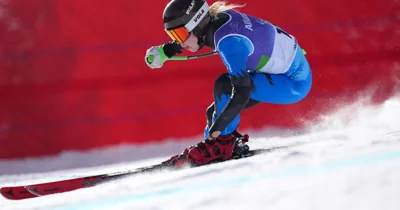
Her rise in the sport was remarkably fast. Huckaby captured two gold medals at the 2018 Winter Paralympics in snowboard cross and banked slalom, establishing herself as one of the brightest new stars in the Paralympic movement.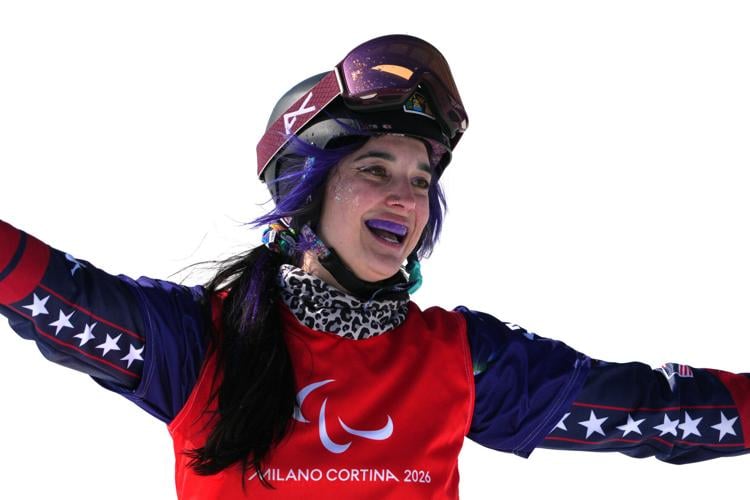
She continued to add to that legacy at the 2022 Winter Paralympics, where she secured another gold medal and a bronze despite competing in a classification that often placed her against athletes with less severe impairments.
Huckaby’s path to those Games was not without controversy. Initially excluded due to classification changes, she filed a legal challenge that ultimately allowed her to compete—an action she said was about ensuring representation and opportunity for athletes with similar disabilities.
Now preparing for the 2026 Winter Paralympics, Huckaby says her focus has shifted from chasing results to appreciating the journey itself. Training has remained consistent, and she describes feeling physically strong heading into the competition, even while acknowledging that outcomes in snowboard cross can be unpredictable.
Despite the competitive pressure, Huckaby insists that medals are no longer the only measure of success. Years of setbacks—from cancer to classification disputes—have reshaped how she views victory.
Her goal remains simple: perform at her best, enjoy the moment, and continue proving that resilience can redefine the limits of sport.
For an athlete whose career began with devastating loss, the slopes have become something far more meaningful than a competition venue. They are the place where Brenna Huckaby transformed survival into one of the most compelling stories in modern Paralympic history.
UDHËTO LIRË.
UDHËTO KOMOD.
Rezervo online shpejt, lehtë dhe pa stres.