Nearly three decades after she stepped onto Olympic ice, figure skating fans are rediscovering the brilliance of Tatiana Malinina’s performance at the 1998 Winter Olympics — and many say the connection to her son, world champion Ilia Malinin, is impossible to miss.
Recently resurfaced footage of Malinina’s short program from the Nagano 1998 Winter Olympics has been circulating widely online, quickly going viral among figure skating enthusiasts. The renewed attention has sparked fascination not just with the performance itself, but with how clearly her technical style appears to live on in her son.
At 53, Malinina’s skating is being praised once again for its extraordinary precision. In the viral clip, every movement appears deliberate and controlled, giving the routine a sense of technical clarity that stands out even decades later. Fans say watching the program today feels almost like looking at the blueprint of Ilia Malinin’s skating style.
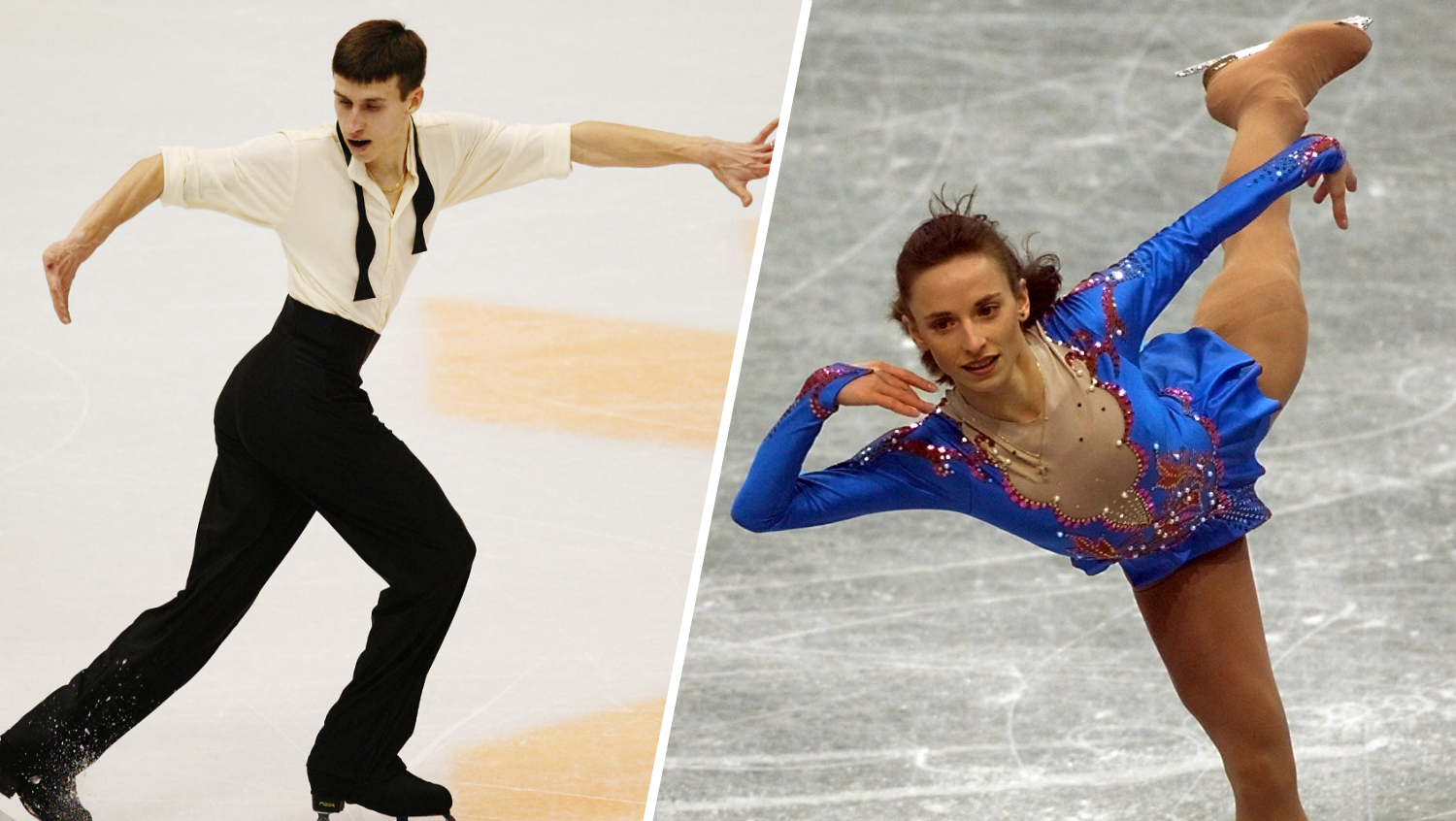
Throughout the performance, Malinina displays remarkable composure on the ice. Her posture remains calm and centered, allowing each element to unfold smoothly without visible strain. The transitions between jumps and spins appear seamless, demonstrating the disciplined fundamentals that defined her competitive career.
One moment in particular has captured the attention of viewers: her triple lutz. The jump unfolds with striking ease — no exaggerated preparation, no frantic arm movement — just a clean edge takeoff followed by a controlled rotation and confident landing. The efficiency of the jump has impressed modern audiences, many of whom note how similar it looks to the technique seen in her son’s skating today.
Online, fans have been quick to point out the parallels between mother and son. Comment sections under the viral clip are filled with comparisons highlighting their shared qualities: the calm presence before jumps, the tight air position during rotation, and the disciplined landings that seem almost mathematically precise.

For many viewers, the resemblance feels far deeper than simple genetics. Instead, it appears to represent a generational transfer of skating knowledge and technique.
Malinina herself had an accomplished competitive career long before her son became one of the sport’s biggest stars. Born in Uzbekistan, she competed internationally throughout the 1990s and was known for her technical consistency and elegant skating style. She also won the 1999 Four Continents Championships, becoming one of the most successful skaters from her region during that era.
Years later, her son Ilia Malinin would rise to global prominence with his own extraordinary technical achievements, including becoming the first skater to land a fully ratified quadruple Axel in competition — a jump widely considered one of the most difficult in the sport.

Now, as fans revisit Malinina’s Olympic performance, many say it offers a fascinating glimpse into the roots of Ilia’s skating abilities.
Watching the footage today, it no longer feels like coincidence. Instead, it looks like a legacy unfolding across generations — a reminder that the foundations of today’s skating stars are often built long before their own careers begin.
For figure skating fans discovering the clip for the first time, one thing is becoming increasingly clear: Ilia Malinin’s remarkable precision didn’t appear out of nowhere. It was already gliding across Olympic ice decades ago.
UDHËTO LIRË.
UDHËTO KOMOD.
Rezervo online shpejt, lehtë dhe pa stres.